 Call
Call 
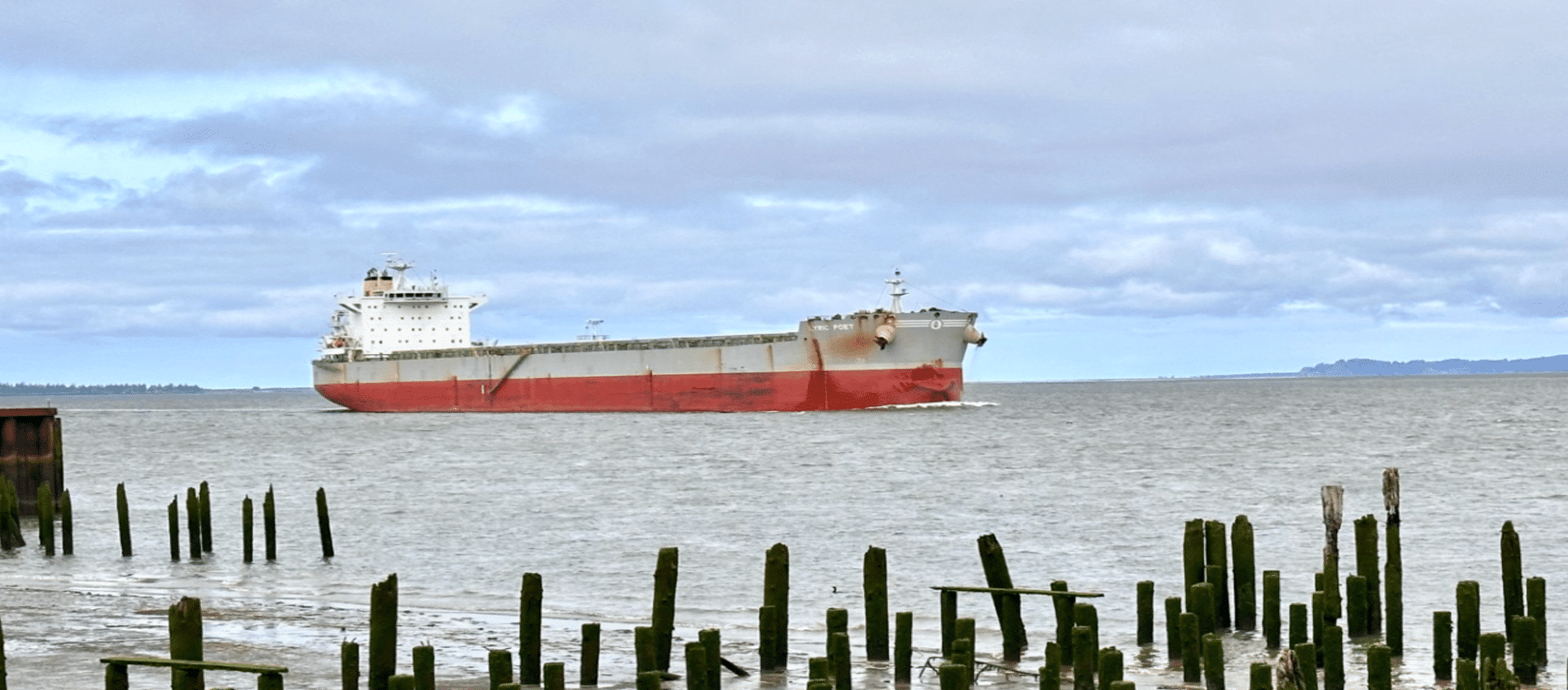
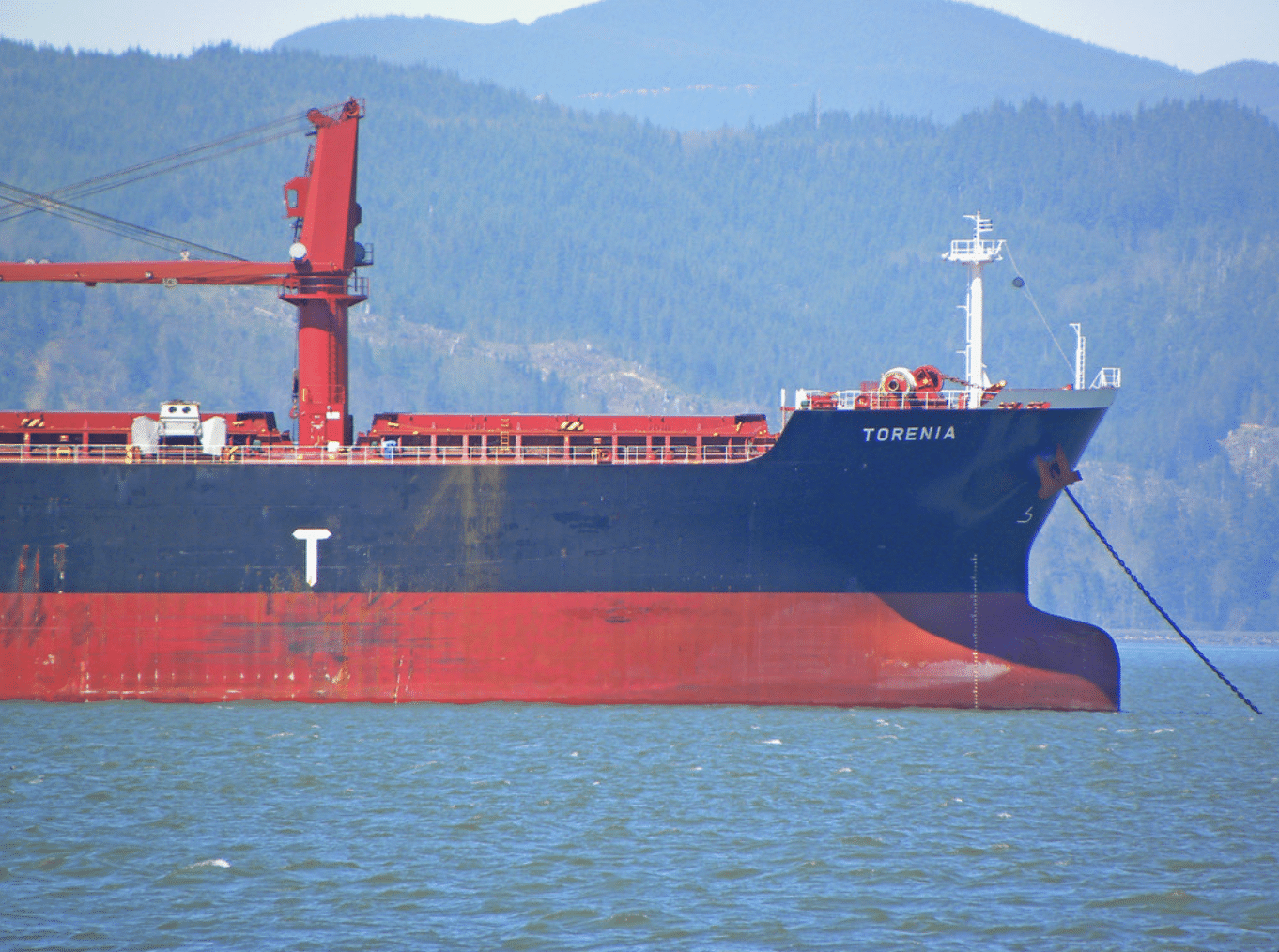
There is a moment that happens to nearly every guest who steps onto one of our balconies for the first time. They settle in with their morning coffee, look up from their cup toward the river — and stop. Something is moving out there. Something enormous. A vessel the length of two football fields is gliding silently along the Columbia, its hull riding low and heavy with grain or cars or containers, its flag catching the morning wind. It has come from somewhere thousands of miles away. And it is passing, right now, just outside your door.
Welcome to what we’ve come to call the Great Estuary Dance — the daily, never-ending procession of international cargo ships, tankers, bulk carriers, container ships, and Coast Guard cutters that make Astoria’s waterfront one of the most quietly spectacular ship-watching destinations in the entire Pacific Northwest.
Why Astoria Is Unlike Anywhere Else
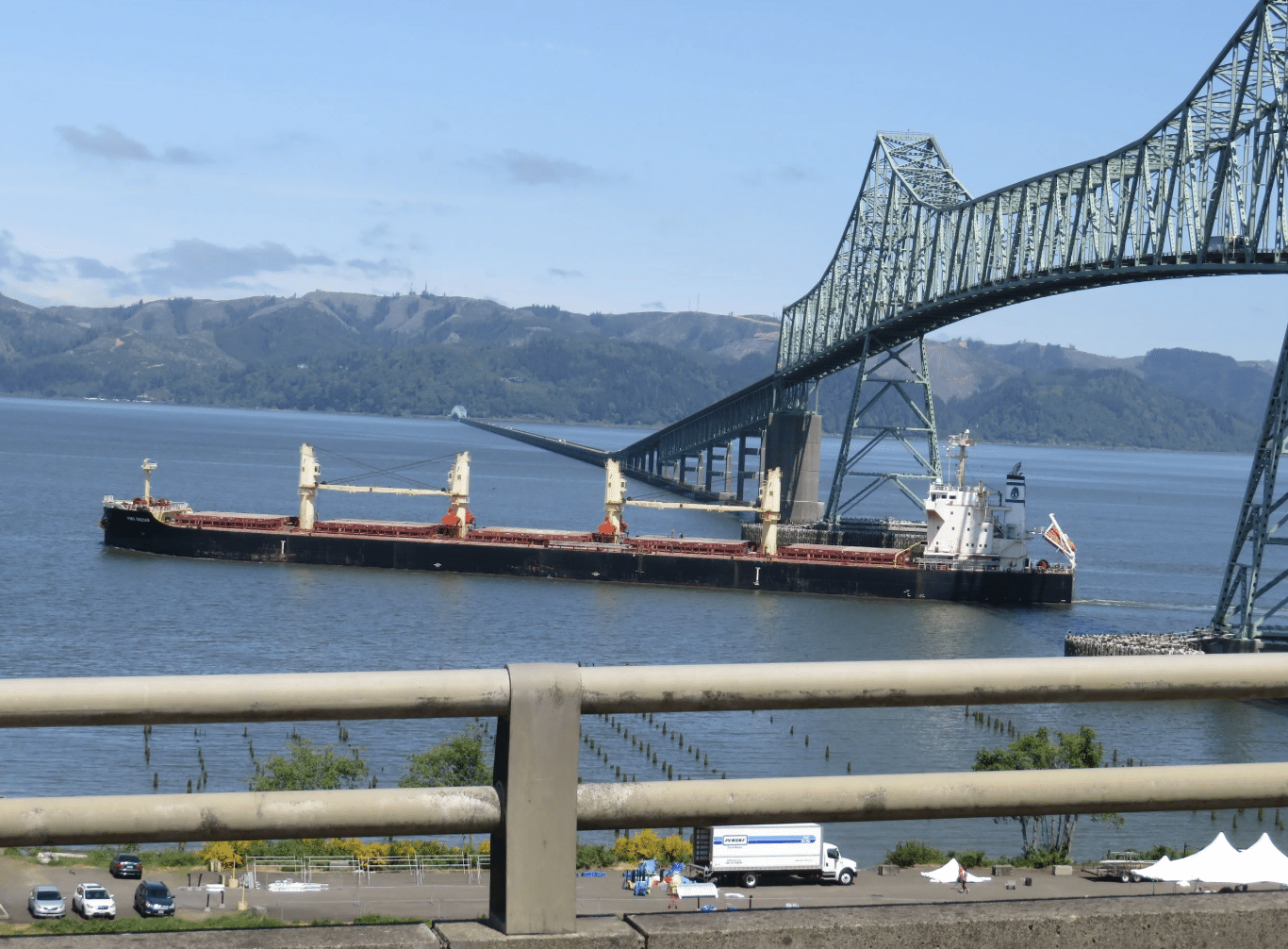
Most port cities keep their working waterfront at arm’s length from their visitors. Not Astoria. Here, the Columbia narrows enough that freighters — some stretching 700 feet or more — pass within a few dozen feet of the downtown waterfront. Ships from Japan, South Korea, China, the Philippines, Panama, Norway, and dozens of other nations transit this stretch every single day, inbound from two weeks at sea or outbound through the Columbia River Bar back into the Pacific.
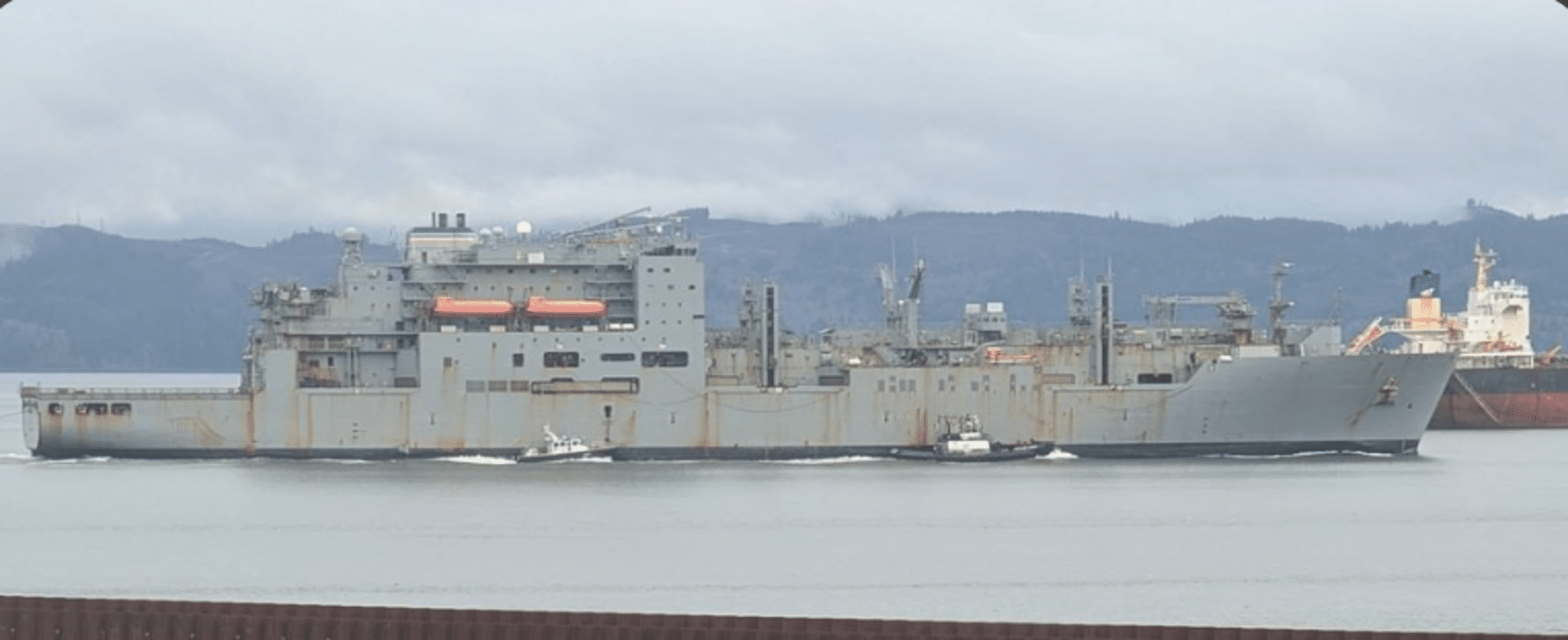
On any given day, you might see commercial and sport fishing boats, cruise ships, research vessels, and 675-foot behemoths stacked with cars, grain, or minerals — they all pass within a few dozen feet of downtown. Astoria is also one of the nation’s 14 official Coast Guard cities, which means military cutters, buoy tenders, and training vessels add their own chapter to the daily parade.
The mouth of the Columbia is not gentle. The Columbia River Bar is considered by professional mariners to be the most dangerous bar crossing on the planet. Since 1792, it has claimed approximately 2,000 ships, earning the ominous nickname “Graveyard of the Pacific.” Watching a modern vessel make that crossing — guided by a specially licensed Bar Pilot who transfers from a fast chase boat in open water — is to witness something that mariners around the world regard with profound respect.
Successful passage grants access to many inland ports, where economic transportation of goods between the Pacific Northwest and the world averages about 40 million tons of cargo valued at $23 billion each year. Every ship you watch pass your balcony rail is carrying a piece of that story.
Our Balconies: A Front-Row Seat to the River
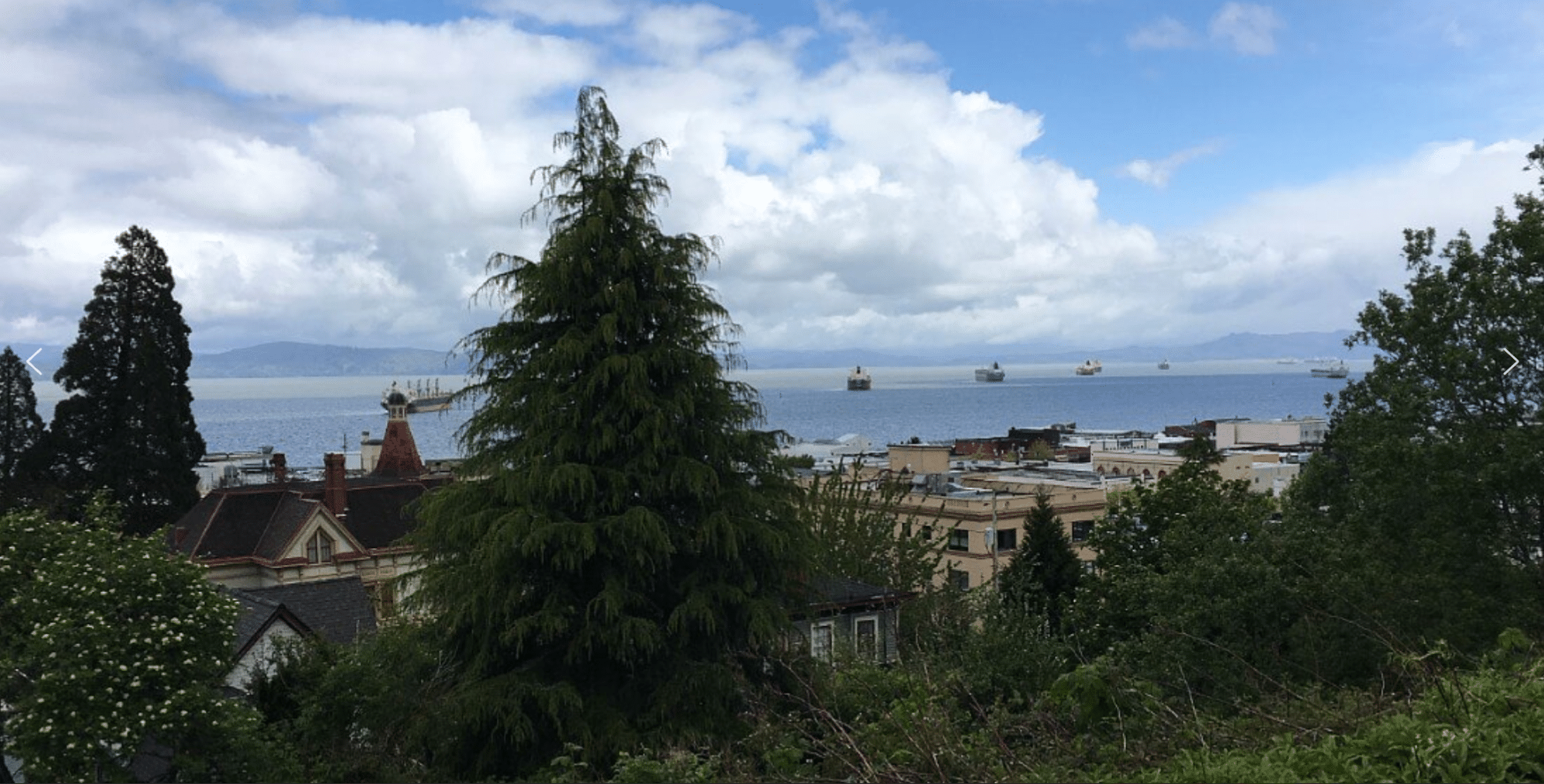
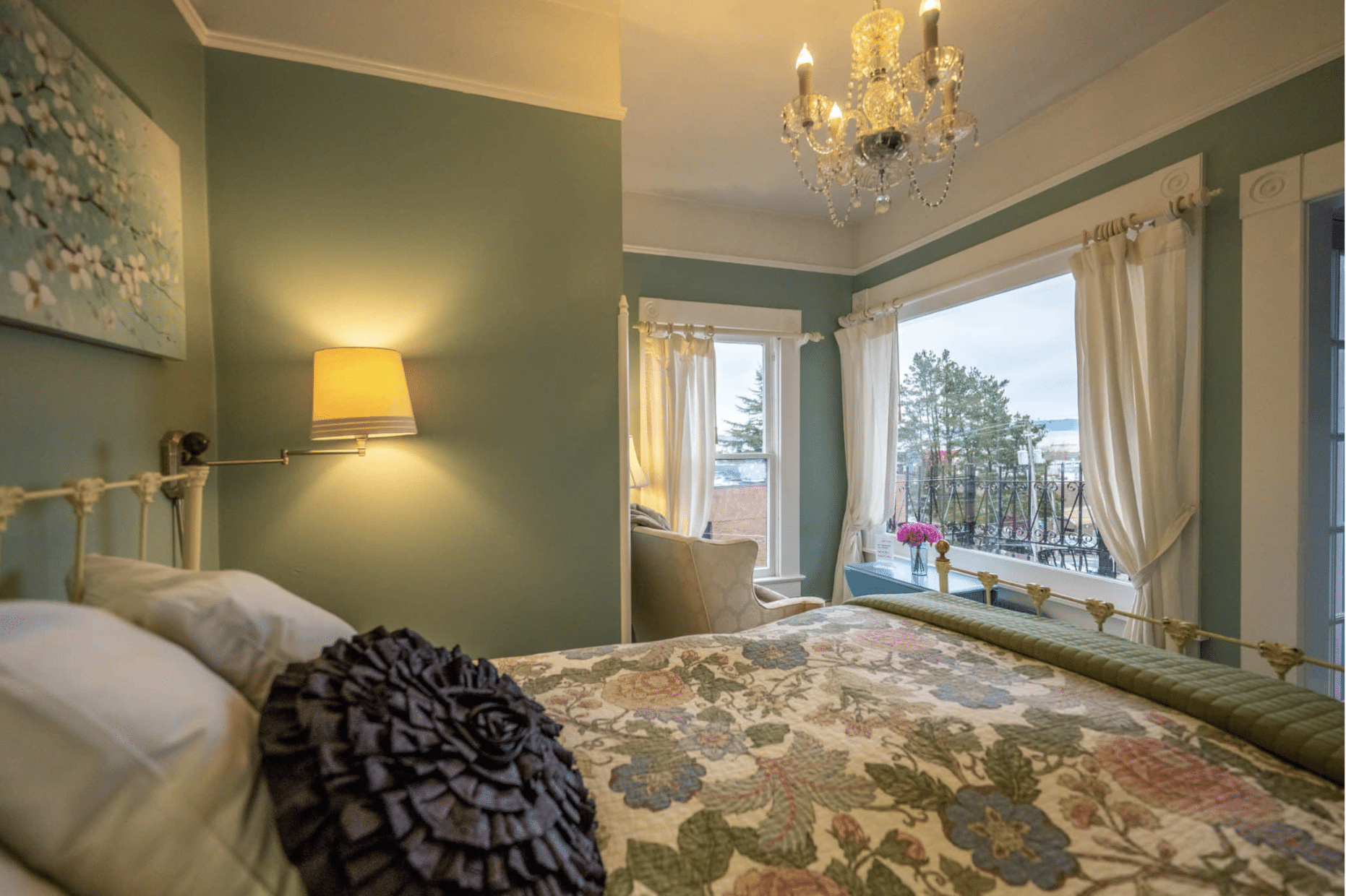
We say it plainly: Clementine’s Guest House has the best balconies in the Pacific Northwest for ship-watching. Perched on Exchange Street just above the waterfront, our upper porches sit at exactly the right elevation — high enough to see the full silhouette of passing vessels, close enough to read the names on their hulls and watch their bow waves push across the river. The writer’s nook, the porch chairs, the quiet — it all exists in conversation with that view.
Guests regularly tell us they planned to step outside for five minutes and found themselves still there an hour later, watching a Korean bulk carrier work its way east toward Portland, followed by a Coast Guard cutter, followed by a fishing fleet heading out for the day. The Columbia does not hurry. Neither should you.
Bring binoculars if you have them. Pack a camera. Pull your chair to the railing and let the river do the rest.
Know What You’re Watching: A Quick Ship-Spotter’s Field Guide
Part of the joy is identification. Once you know what to look for, every ship tells a different story.
Container ships are the most recognizable — stacked high with colorful metal boxes. The containers hold everything: electronics, clothing, furniture, food. A single large container ship might carry goods bound for dozens of American cities.
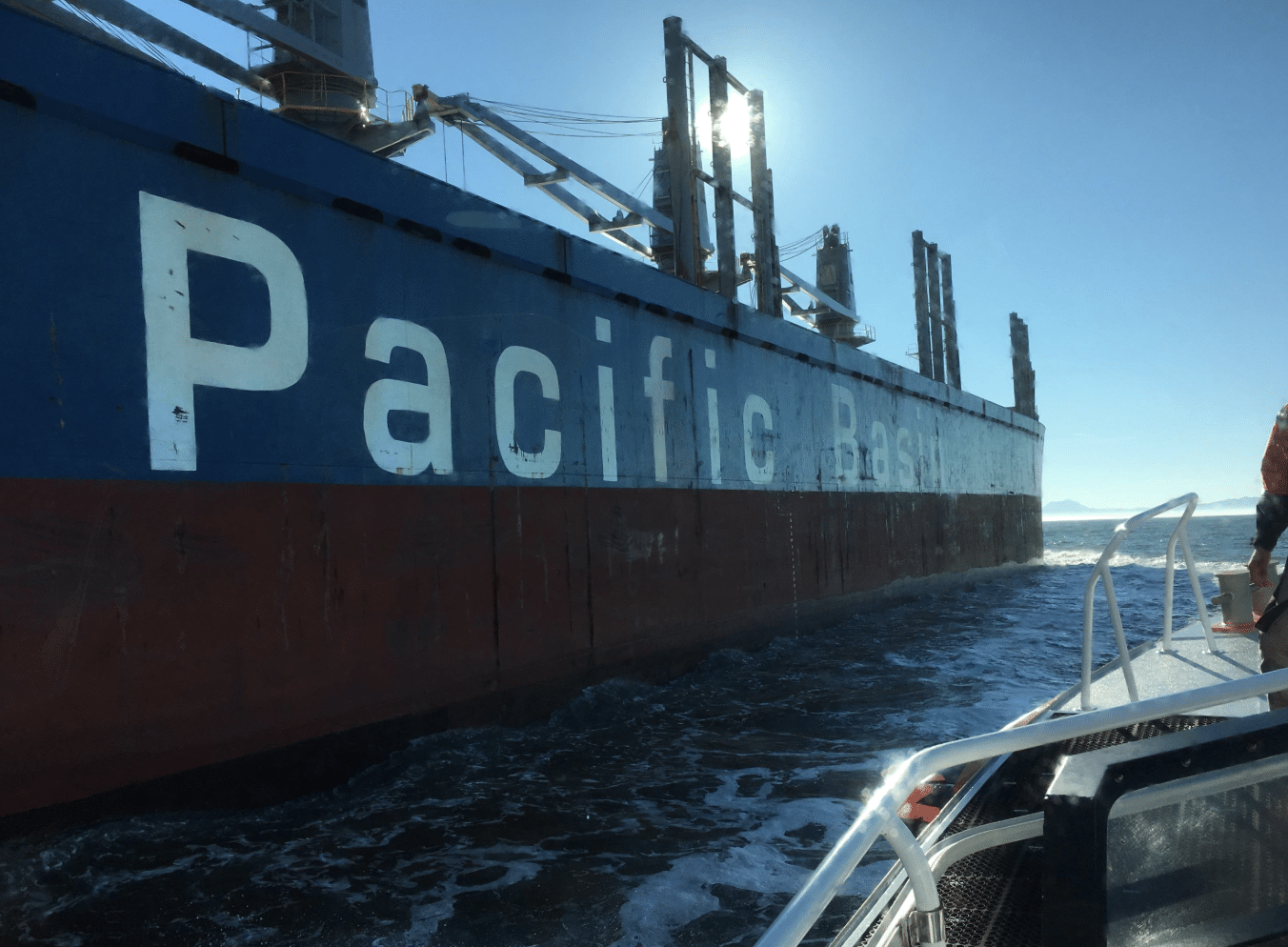
Bulk carriers ride low in the water, their decks flat and relatively uncluttered. They typically carry grain (the Columbia River basin is one of the world’s great wheat-exporting regions), minerals, or raw materials. Watch how the waterline sits — a loaded bulk carrier riding low means a heavy cargo bound outbound; a high waterline on an inbound vessel means it’s coming in empty, ready to load.
Car carriers — called Ro-Ro (Roll-On Roll-Off) ships — are instantly distinctive. They’re boxy, windowless on the hull, and enormous. Think of a floating parking garage. Thousands of vehicles are driven aboard in Asia and driven off again in Pacific Northwest ports.
Tankers carry liquid cargo: petroleum, chemicals, or liquefied natural gas. They ride lower than car carriers but higher than loaded bulk carriers, and their hulls are typically smooth and uniform.
The Bar Pilot boats are worth watching for on their own. Ships generally must by law have a river or bar pilot on board when they are on the Columbia or Willamette Rivers. Watching a pilot transfer — a brave individual crossing between a fast launch and the ladder of a moving ship in open Pacific water — is one of the most quietly dramatic maritime rituals you’ll ever witness.
Your Secret Weapon: The Ship Report
Before the apps existed, Joanne Rideout was already doing this. Rideout created The Ship Report in 2003 and has been interviewing, writing, and photographing the maritime world ever since. Her program airs weekdays at 8:49 AM on KMUN 91.9 in Astoria and is available as a podcast on Spotify and Apple Podcasts — and it is essential listening for anyone who wants to understand what they’re watching on the river. Or check out online schedule at www.shipreport.net.
The Ship Report provides the Columbia River Ship Traffic schedule, showing each day’s schedule as well as each ship’s destination and cargo. Rideout captures what no app can: the texture, the lore, the human element. When she says a vessel is inbound from Yokohama carrying automobiles, you don’t just see a ship — you see a connection.
Listen before you watch. Pull up The Ship Report podcast the night before. Know what’s coming. Then pour your coffee, step onto the balcony, and wait.
The Apps: Track Every Ship on the Planet
Here is where ship-watching becomes genuinely addictive. These tools use AIS — Automatic Identification System — technology, the same signals that ships are legally required to broadcast and that maritime professionals worldwide rely on for navigation and port management. With them, you can watch the global fleet in real time, set alerts for specific vessels, and know exactly when a ship will be passing Astoria before it clears the bar.
MarineTraffic — The Gold Standard
MarineTraffic is the world’s most recognized ship-tracking app, displaying more than 800,000 vessel positions per day via a global network of AIS stations. You can see a ship’s type, flag, length, draft, destination, speed, and full voyage history — essentially its complete identity card. The interactive map lets you filter by vessel type and zoom into the Columbia River in real time to see exactly what’s in motion.
Best use from Clementine’s: Pull up the Columbia River on the live map. Tap any vessel icon and you’ll see the ship’s name, flag, last port, destination, and estimated arrival time at Astoria. Follow a vessel you spotted from the balcony and watch where it goes next.
Free with optional paid tiers — iOS, Android, and marinetraffic.com
VesselFinder — Best for Beginners (and the Photos)
VesselFinder offers the same essential AIS tracking with a cleaner, more open free tier — no account upgrades required to see the details that matter most. What sets it apart for ship-spotters is its community photo library: enthusiasts around the world upload photographs of vessels, so you can often see exactly what a ship looks like before it rounds the bend into view from your balcony. It’s a lovely way to anticipate what’s coming.
Free — iOS, Android, and vesselfinder.com
Columbia River Bar Pilots — The Local Insider View
For the most hyperlocal intelligence, go straight to the source. The Columbia River Bar Pilots website (columbiariverbarpilots.com) publishes information on inbound and outbound ships, vessel details, previous ports, and estimated arrival times to Astoria. This is the actual schedule the maritime industry uses, updated continuously. Pair it with either app above and you’ll have professional-grade knowledge of what’s coming down the river before it arrives.
The Columbia River Maritime Museum: Context for Everything You See
A ten-minute walk from Clementine’s along Marine Drive sits the institution that makes all of this watchable on a deeper level. The Columbia River Maritime Museum isn’t just a great museum — it’s the essential companion to the view from our balconies.
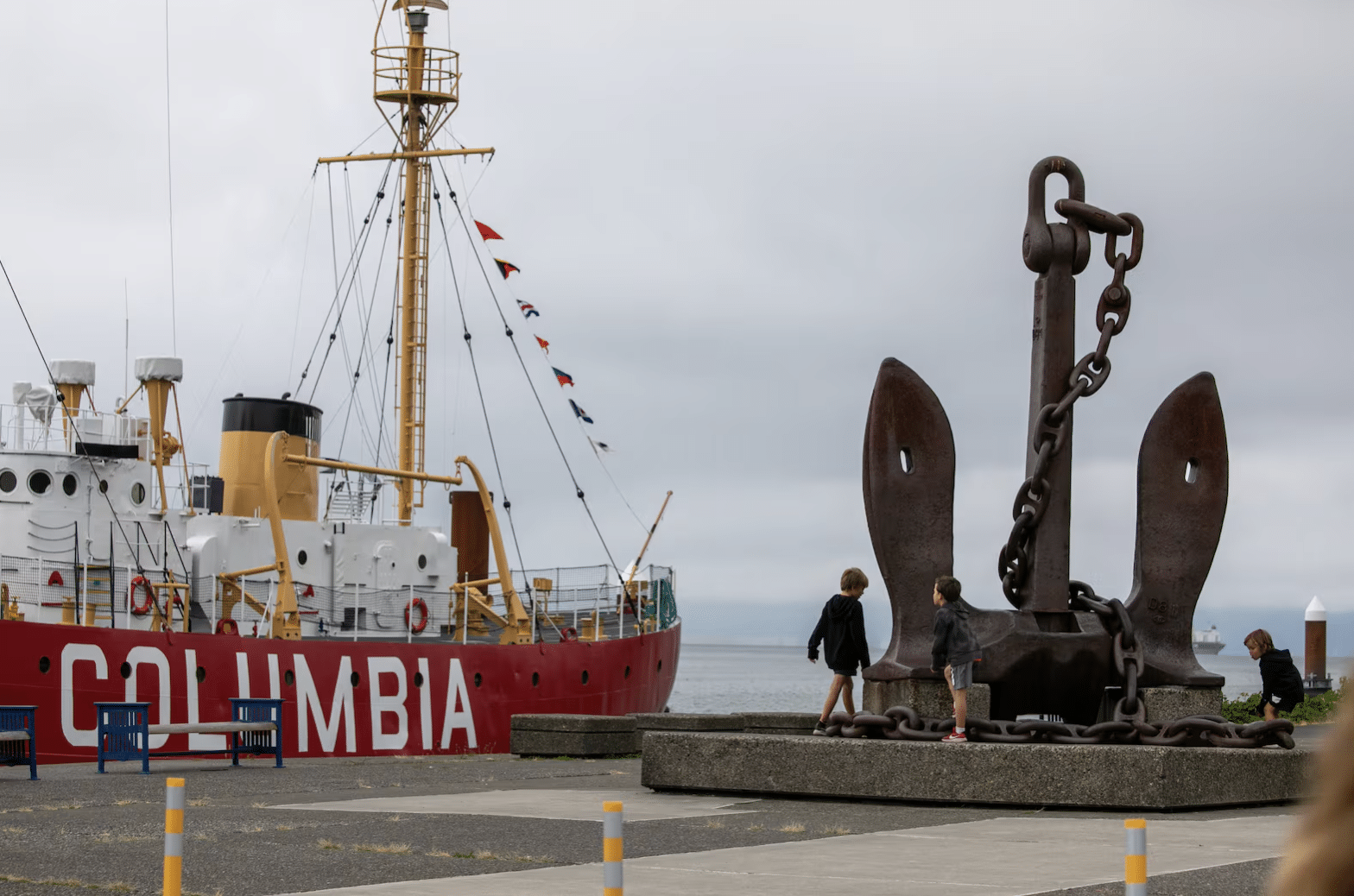
The museum explores the extreme forces at work along the Columbia River Bar, with exhibits about waves that can exceed 40 feet in height during the most severe winter storms, the U.S. Coast Guard, the Columbia River Bar Pilots, the legendary fishing runs, and a tour of the floating lighthouse, the Lightship Columbia.
The Lightship Columbia herself, moored just outside the museum, is one of only six surviving Coast Guard-built lightships in the country. She was the last lightship to serve on the West Coast, guarding the treacherous Columbia River Bar before being replaced in 1979 by a buoy. Standing on her deck, looking out at the river you’ve been watching from the balcony, closes a historical loop that’s hard to put into words.
The museum’s library houses an extensive collection of books, journals, and periodicals related to the maritime history of the Columbia River and the Pacific Northwest, covering everything from shipwrecks and navigation to fishing industries. Its archival holdings include original ship logs, personal diaries of mariners, corporate records of local canneries, historical maps and charts, and a vast photographic collection documenting life on the river and coast over the centuries.
For photographers especially, the museum’s photographic archive is a revelation — and an inspiration.
For the Photography Community: Astoria Is a Gift
Ship photography is a genuine art form, and Astoria may be the finest location on the West Coast to practice it. A few notes for the photographers in our guest rooms:
The light: Astoria’s famously dramatic weather produces extraordinary light conditions. Morning fog burning off the river, low-angle winter sun catching a hull at full beam, storm light over the bar — the Columbia delivers something remarkable almost every day.
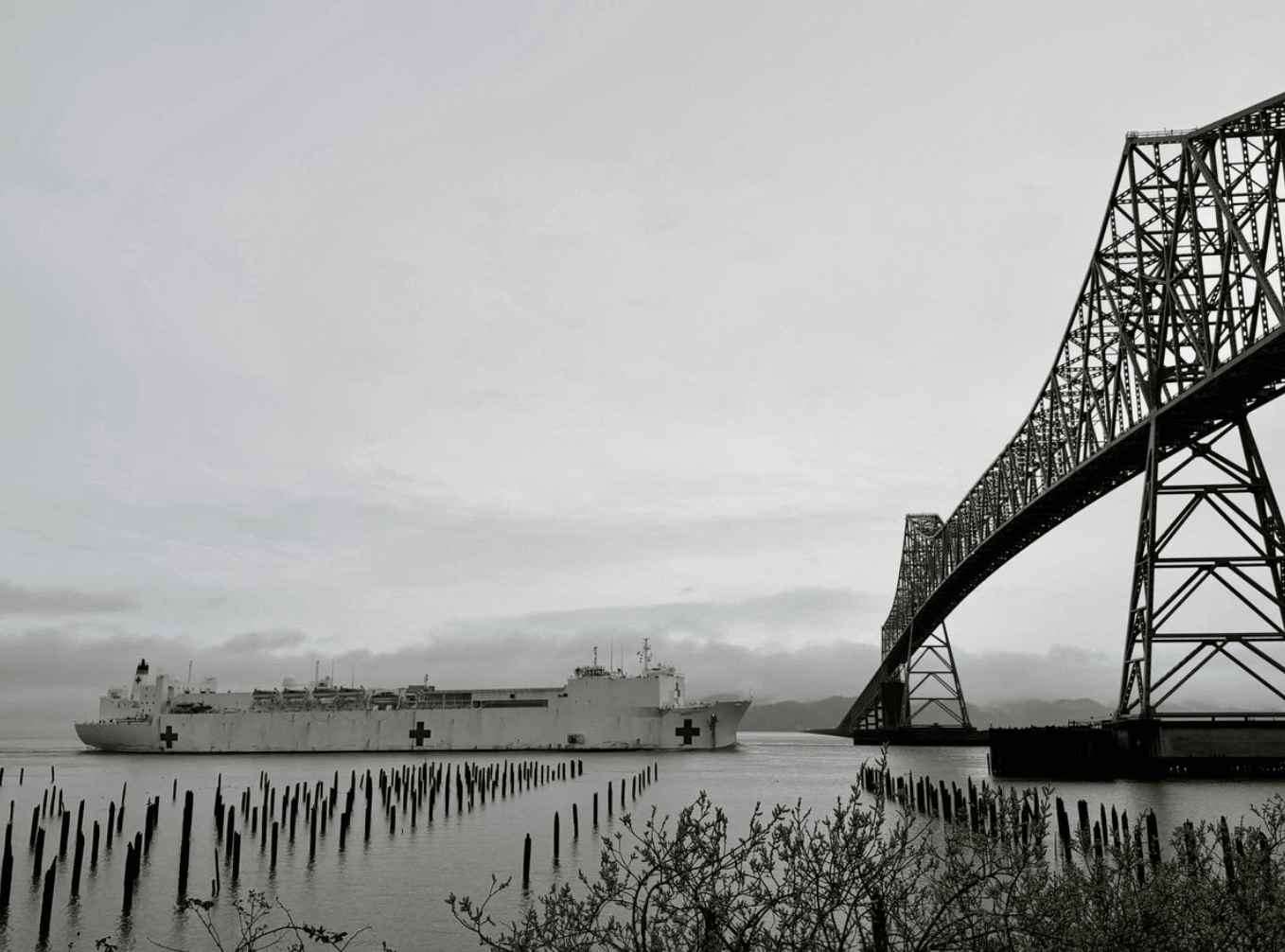
The bridge: The Astoria-Megler Bridge provides one of the great compositional anchors in Northwest photography. “The bridge is so iconic, and it gives you the scale and size, so it’s a great place to take a picture,” says Ship Report host Joanne Rideout. Walking or biking down the Astoria Riverwalk beneath the bridge gives you perfect, obstruction-free shots.
Timing: Know your ship’s ETA before you position yourself. A 700-foot vessel crossing the bar takes time. Use MarineTraffic or VesselFinder to check speed and estimated arrival, then get your spot early. Ships don’t wait for photographers to settle their tripods.
Elevation: Our upper balconies give you the slight elevation that’s often the difference between a shot with a cluttered foreground and a clean composition against open sky and river. Guests are always welcome to use the balcony for shooting. You’d be surprised how many photographers have gotten the shot of a season right from their room.
The community: Astoria has a growing community of maritime photographers who share work online and sometimes gather at known spotting locations. The Columbia River is a living subject — the fleet changes, the light changes, the weather changes. No two mornings look the same.
How to Plan Your Perfect Ship-Watching Morning at Clementine’s
The night before, listen to The Ship Report podcast and pull up the Columbia River Bar Pilots schedule online. Note what vessels are expected inbound the next morning and their approximate arrival windows.
Set a vessel alert in MarineTraffic for anything that catches your eye on the schedule.
Wake early. The low morning light on the river is something special, and inbound ships often time their bar crossing to arrive in Astoria by mid-morning. Brew coffee in your room. Carry it to the balcony.
Open MarineTraffic or VesselFinder on your phone and watch the river come alive. As a vessel rounds into view, you’ll already know its name, its flag, where it’s been, and where it’s going. You’ll watch it pass not as a stranger, but as something you’ve been waiting for.
Then close the app, put down the phone, and just watch. Because the Great Estuary Dance — the Columbia’s steady, ancient exchange with the sea — is one of the genuinely unhurried spectacles left in a hurrying world.
It is best experienced from a comfortable chair, with a warm cup, and a view you don’t have to share.
Book Your Stay
Clementine’s Guest House 847 Exchange St, Astoria, OR 97103 (503) 325-2005
Balconies included. Ships not guaranteed – but they show up anyway.
Clementine’s Guest House is a historic inn on Exchange Street in the heart of Astoria, Oregon, with some of the finest elevated river views in the Pacific Northwest. Binoculars available at the front desk.